Equipment 22 players, 6 brands
What Racquets Do Pros Use? The Frames of ATP and WTA Players, Brand by Brand
Racquet makers sign the best players to carry their frames, and fans want to know which one actually sits in the bag. Here is what the makers and the major outlets have confirmed for the top of the ATP and WTA, with the year of each confirmation.
- Players confirmed
- 228 ATP, 14 WTA, each with a source
- Most common brand
- Yonex10 of the players in our table
- Maximum length
- 29 inITF Rules of Tennis, Appendix II
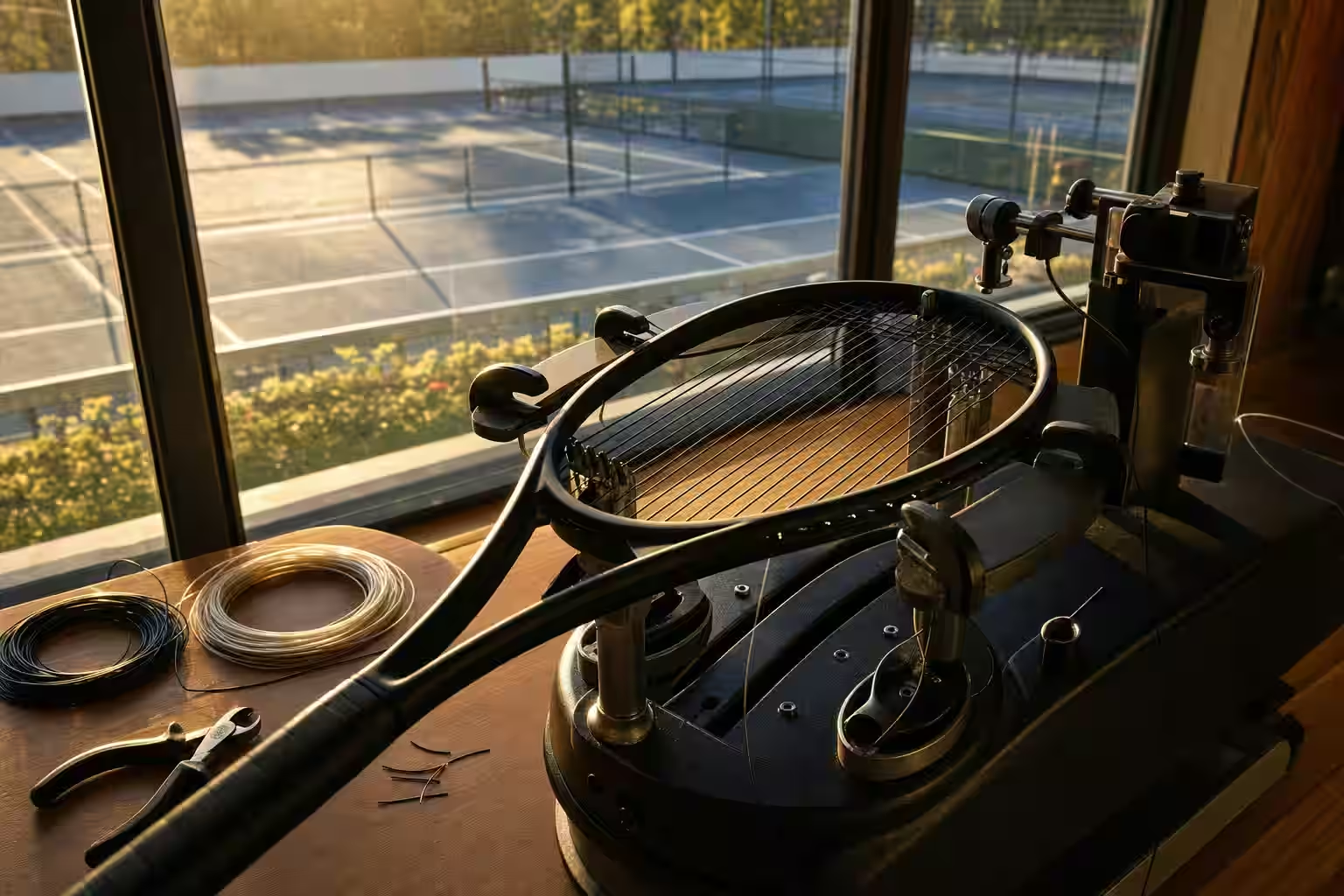
How we confirmed each racquet
What racquets do pros use, and how we know
Pros mostly play frames from Yonex, Wilson, Babolat, Head and Tecnifibre. We list a player only when the maker or a major outlet has named the model, and we show the year of that confirmation.
What racquets do pros use? The honest answer starts with a caveat. The racquet a sponsor sells under a player's name and the frame that player actually swings are not always the same thing, and the gap is part of the business. So the tables below follow a strict rule. A model appears only when the manufacturer's own athlete or product page, or a major outlet such as Tennis.com or the WTA, has named it for that player.
Each row carries the year of the source, and the year links to it. A 2025 confirmation is not the same as a 2023 one; players switch frames, and brands relaunch their lines with new paint and a new generation number. Where a source is a couple of seasons old, read the row as "the last confirmed model" rather than a promise about this week's bag.
The makers say as much themselves. Yonex prints the sentence on its athlete pages: "Yonex professional players may use a customized racquet with different specifications from the model shown." Babolat makes the same point on its product pages. Data as of October 22, 2026.
ATP players
What racquets ATP players use
Carlos Alcaraz is listed with the Babolat Pure Aero 98, Felix Auger-Aliassime with the Babolat Pure Aero 98 and Jannik Sinner with the Head Speed MP; the biggest brand group on the ATP board is Yonex: Ben Shelton, Casper Ruud, Frances Tiafoe and Tommy Paul.
| Player | Brand | Model | Confirmed |
|---|---|---|---|
| Carlos Alcaraz | Babolat | Pure Aero 98 | 2026 |
| Jannik Sinner | Head | Speed MP | 2026 |
| Felix Auger-Aliassime | Babolat | Pure Aero 98 | 2026 |
| Ben Shelton | Yonex | EZONE 98 | 2025 |
| Casper Ruud | Yonex | EZONE 100 | 2025 |
| Frances Tiafoe | Yonex | PERCEPT 97 | 2025 |
| Tommy Paul | Yonex | VCORE 98 | 2025 |
| Daniil Medvedev | Tecnifibre | T-Fight 305 Isoflex | 2023 |
The two players who split the biggest titles of recent seasons use different brands. Carlos Alcaraz has been sponsored by Babolat since he was 12; the table lists the Babolat Pure Aero 98. Jannik Sinner is listed with the Head Speed MP.
The table lists Shelton with the Yonex EZONE 98, Paul with the Yonex VCORE 98 and Frances Tiafoe with the Yonex PERCEPT 97; Yonex is the brand with the most players in our table. Daniil Medvedev's row, the Tecnifibre T-Fight 305 Isoflex, carries a 2023 source, so read it as the last confirmed model.
WTA players
What racquets WTA players use
Aryna Sabalenka is listed with the Wilson Blade 98 (18x20), Iga Swiatek with the Tecnifibre T-Fight 300 and Coco Gauff with the Head Boom MP. Jessica Pegula, Madison Keys and Naomi Osaka all use the Yonex EZONE 98.
| Player | Brand | Model | Confirmed |
|---|---|---|---|
| Aryna Sabalenka | Wilson | Blade 98 (18x20) | 2023 |
| Iga Swiatek | Tecnifibre | T-Fight 300 | 2024 |
| Coco Gauff | Head | Boom MP | 2022 |
| Elena Rybakina | Yonex | VCORE 100 | 2024 |
| Jessica Pegula | Yonex | EZONE 98 | 2025 |
| Madison Keys | Yonex | EZONE 98 | 2025 |
| Amanda Anisimova | Wilson | Blade 98 (16x19) | 2025 |
| Mirra Andreeva | Wilson | Blade 98 (16x19) | 2024 |
| Jasmine Paolini | Yonex | VCORE 100 | 2026 |
| Naomi Osaka | Yonex | EZONE 98 | 2025 |
| Emma Navarro | Yonex | VCORE 98 | 2026 |
| Elina Svitolina | Diadem | Axis 98 | 2025 |
| Qinwen Zheng | Wilson | Pro Staff 97 | 2024 |
| Ons Jabeur | Wilson | Pro Staff 97 | 2023 |
Yonex has the most players on the women's list, 6 of 14. Elena Rybakina is listed with the Yonex VCORE 100, Jasmine Paolini with the Yonex VCORE 100 and Emma Navarro with the Yonex VCORE 98; Jessica Pegula, Madison Keys and Naomi Osaka all use the Yonex EZONE 98. Madison Keys is the interesting case. She left Wilson for Yonex just before the 2025 Australian Open, and Tennis.com later traced how the new frame fed into the first Grand Slam title she won at that same tournament.
The table lists Aryna Sabalenka with the Wilson Blade 98 (18x20), Amanda Anisimova with the Wilson Blade 98 (16x19) and Mirra Andreeva with the Wilson Blade 98 (16x19), while Qinwen Zheng is listed with the Wilson Pro Staff 97 and Ons Jabeur with the Wilson Pro Staff 97. Iga Swiatek moved to a new Tecnifibre frame at the start of 2024 after years with the Tempo; her row now reads Tecnifibre T-Fight 300. Coco Gauff is listed with the Head Boom MP.
Elina Svitolina is the most unusual name here. She left Wilson at the start of 2025 for Diadem, a much smaller brand on tour, and made a deep run at the 2025 Australian Open in her first weeks with its new frame.
Brands on tour
Racquet brands of the pros, counted
In our table of 22 confirmed players, Yonex leads with 10. It is a count of the players we could confirm, not a census of the tour.
Racquet brands in our table
Number of players with a confirmed model, ATP and WTA together
| Brand | Number of players | Players |
|---|---|---|
| Yonex | 10 | |
| Wilson | 5 | |
| Babolat | 2 | |
| Head | 2 | |
| Tecnifibre | 2 | |
| Diadem | 1 |
Counted from the two tables above. Players without a confirmed model are left out, so this is not market share.
The order could shift if every player in the top 100 were included, because brands whose players lacked a current, citable confirmation are undercounted here. Wilson's numbers swing with each racquet relaunch, because a new generation means new pages naming who plays it.
Readers who arrive here looking for "the best Babolat racquets" or "the best Head rackets" will not find a ranking. What the pros use tells you which frames the brands invest in; it does not tell you which one suits a club player, and we do not sell or test racquets.
What the rules allow
How big can a pro racquet be? The ITF limits
The ITF Rules of Tennis cap a racquet at 29.0 inches (73.7 cm) in length and 12.5 inches (31.7 cm) in width, with a strung surface no bigger than 15.5 by 11.5 inches (39.4 by 29.2 cm). Every frame on tour fits inside those numbers.
Appendix II of the Rules of Tennis, published by the International Tennis Federation, sets the hard limits. A racquet may not exceed 29.0 inches (73.7 cm) in overall length, including the handle, or 12.5 inches (31.7 cm) in overall width. The hitting surface is capped at 15.5 by 11.5 inches (39.4 by 29.2 cm). The strings must cross and be interlaced or bonded where they cross, the pattern may not be less dense in the center than anywhere else, and the racquet must play the same on both faces.
One clause has a bigger effect on pros than the size limits. The appendix bans attachments that change a racquet's shape or performance, then makes exceptions for devices that limit wear or vibration and, "for the frame only, to distribute weight". That short phrase is what makes lead tape legal, and lead tape is one of the simplest ways for a player to turn a shop frame into their own. The same appendix also rules out any energy source built into a racquet, and it states that SI units take precedence, which is why the official limits are really 73.7 cm and 31.7 cm, with inches as the conversion.
Retail vs pro
Can you buy the same racquet as a pro?
You can buy the model with the same name and paint. The frame in a pro's bag may be customized in weight and balance, or be a different model underneath, as Yonex and Babolat both state.

The shop version and the tour version share a name, a color scheme and a mold in most cases. Beyond that, pros adjust. Lead tape at the head or handle changes the weight and balance; a custom grip changes the feel; string type and tension are chosen per player and sometimes per match. The brands say openly that their pros may use different specifications from the model shown, which is as far as an official source goes.
Some players have stayed with an older mold for years and simply had it painted in the colors of each new release. That practice is widely discussed by stringers and gear writers, but it is rarely confirmed by the players or brands for a specific frame, so we do not list it in the tables.
If you want the closest thing to a pro's setup, buying the named model is the start. Matching its weight and balance is the part that takes a stringer and a scale.
Head size and string pattern
What the numbers on a pro racquet mean
The number in a model name, such as 98 or 100, is usually the head size in square inches. String patterns like 16x19 or 18x20 count the main and cross strings; a denser pattern tends to give more control, an open one more spin.
Most of the frames in our tables carry 97, 98 or 100 in the name. That is the head size in square inches. Smaller heads tend to suit players who supply their own pace and want control, which is why so many tour frames sit in the high 90s; larger heads offer a bigger sweet spot and more easy power. On our WTA board, Rybakina and Paolini are listed with 100 square inch frames, so treat this as a tendency, not a law.
The string pattern is the second number to look at. Sabalenka is listed with the Blade 98 (18x20), Anisimova with the Blade 98 (16x19) and Andreeva with the Blade 98 (16x19). The first figure counts the main strings running up and down the face, the second the crosses. A denser 18x20 bed usually plays more precisely; a 16x19 bed lets the strings move and snap back, which helps spin. Weight, balance and stiffness count just as much, and those are the specs pros customize most.
Players not listed
Players whose racquets we could not confirm
For players such as Alexander Zverev, Novak Djokovic, Stefanos Tsitsipas, Hubert Hurkacz, Nick Kyrgios and Karolina Muchova we did not find a current manufacturer or major-media confirmation, so they are not listed.
The same applies to a long tail of names that fans search for: Andy Murray and Petra Kvitova after their retirements, Stan Wawrinka, Karen Khachanov, Borna Coric, Roberto Bautista Agut, Marketa Vondrousova, Simona Halep, Caroline Garcia, David Goffin and Maxime Cressy. Many of them are tied to a brand, and gear sites often name a model. We have not found that model stated by the maker or a major outlet with a recent date, so we leave the cell empty rather than repeat a guess.
When a confirmation appears, the player is added with its source and year. For the season context around these players, see our players hub and the tennis calendar, which shows where the next big events are played, from the ATP Finals and the United Cup to Indian Wells and the Miami Open.
FAQ
What racquets pros use: questions and answers
Short answers on pro racquets, the brands behind them and the rules, based on the confirmed rows in the tables on this page.
What racquets do most pros use?
Among the 22 players we could confirm, Yonex is the most common brand with 10 players, followed by Wilson. That is a count of our table, not a share of the whole tour.
What racquet does Jannik Sinner use?
A Head Speed MP, per the 2026 source linked in the table.
What racquet does Carlos Alcaraz use?
A Babolat Pure Aero 98, per the 2026 source linked in the table. Makers note that pros may play a customized or different model.
What racquet does Aryna Sabalenka use?
A Wilson Blade 98 (18x20), per the 2023 source linked in the table.
What racquet does Coco Gauff use?
A Head Boom MP, per the 2022 source linked in the table.
What racquet does Ben Shelton use?
A Yonex EZONE 98, per the 2025 source linked in the table.
Do pros use the same racquets you can buy?
Not always. Yonex states that its professional players may use a customized racquet with different specifications from the model shown, and Babolat makes the same point. The paint job matches the shop model; weight, balance and sometimes the mold may not.
How big can a tennis racquet be?
The ITF rules cap the overall length at 29.0 inches (73.7 cm) and the overall width at 12.5 inches (31.7 cm). The strung area may not exceed 15.5 by 11.5 inches (39.4 by 29.2 cm).
Why do pros use smaller heads than club players?
A smaller head usually gives more control and less free power, which suits players who generate their own pace. It is a general tendency, not a rule; several top players in our table use 100 square inch frames.
Why is a player I looked up missing from the tables?
We list a racquet only when the manufacturer or a major outlet has named it. Where we found no such confirmation, the player is left out rather than guessed.