Season finale November 15 - 22, 2026
ATP Finals Explained: The Format, Qualification, Points and Prize Money
Eight players, two groups, one week indoors at the end of November. The ATP Finals is the only event of the season where a player can lose a match and still win the title, and the one with the biggest payday on the ATP calendar outside the four majors.
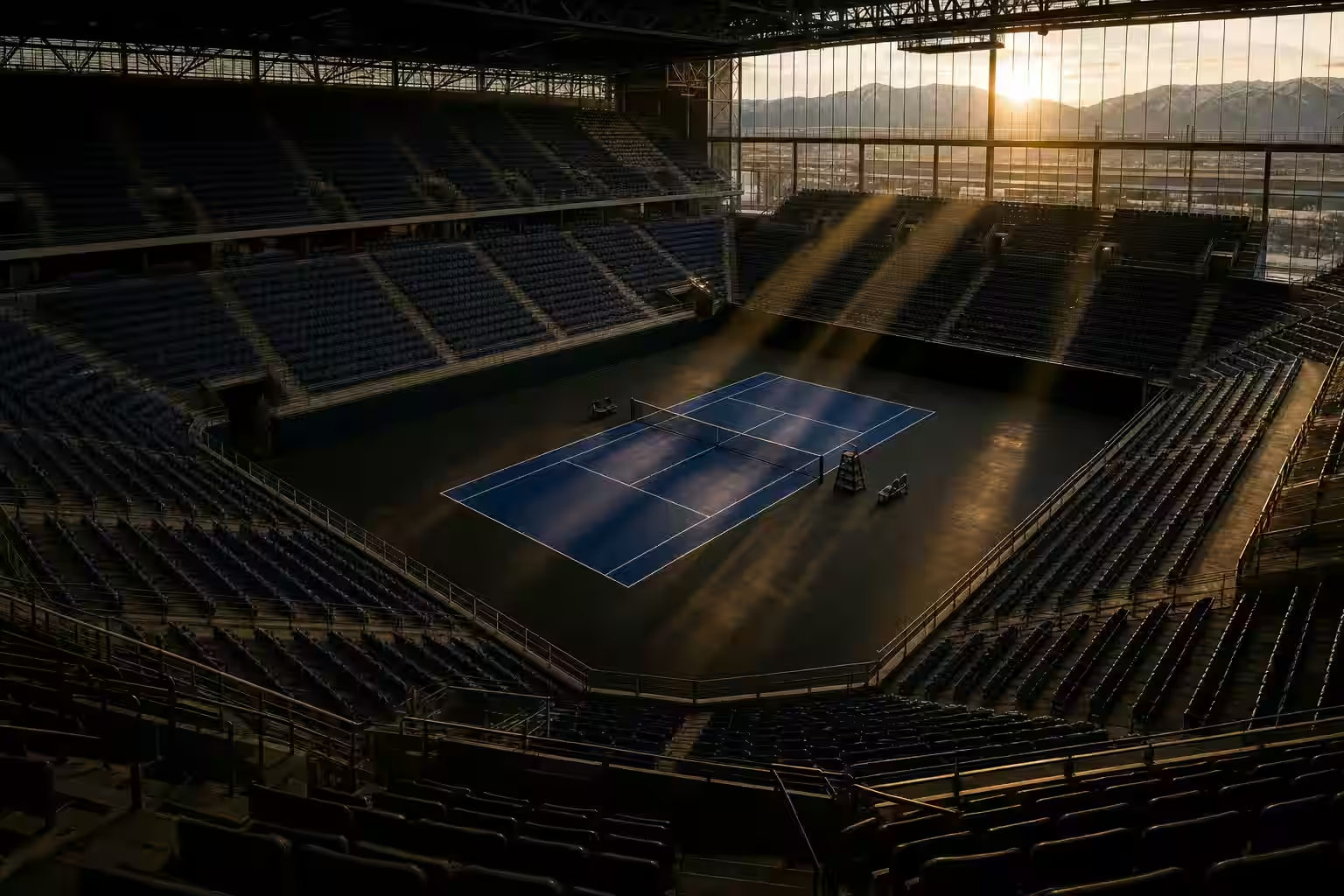
- Edition 2026
- 2026November 15 - 22, 2026, Inalpi Arena, Turin
- Unbeaten champion, 2025
- $5.07M$5,071,000, plus 1,500 ranking points
- Total prize money, 2025
- $15.5M$15,500,000, singles and doubles together
Next edition
When is the next ATP Finals?
In shortThe next edition, with dates from the tours' published calendar and a file for your own calendar app.
The next ATP Finals
ATPATP Finals
In 6 days
November 15 to November 22, 2026
Turin, Italy
Add to calendarATPATP Finals
In 370 days
November 14 to November 21, 2027
Italy, Italy
Add to calendar
Dates are the tours' published calendar, checked every week. See the full season calendar.
Prize money per stage
ATP Finals prize money, stage by stage
In shortIn 2025 every qualifier earned a $331,000 participation fee, then $396,500 per group win, $1,183,500 for a semifinal win and $2,367,000 for winning the final. An unbeaten champion took $5,071,000.
The ATP Finals is the last big title of the men's season and the strangest one to explain to a newcomer. There is no draw of 64 or 128, no qualifiers and no wild cards for local hopes. Eight men are invited because they earned it over eleven months, and they play each other in two small groups before the event turns into a normal knockout for its last three days. Prize money follows that shape: you are paid for each match you win, not for the round you reach. The table below is the ATP's official singles breakdown for 2025.
ATP Finals prize money per stage
Singles, per player, 2025 edition, in US dollars
- Participation feepaid to every qualifier who plays all three group matches$331,000no points
- Each group-stage winup to three wins in the round robin$396,500200 pts
- Semifinal winthe knockout stage starts with the top two of each group$1,183,500400 pts
- Winning the finalthe last match of the season$2,367,000500 pts
ParticipationGroup winsSemifinalFinal
Champion, 3-0 in the group$5,071,000
Source: ATP Tour release on the 2025 Nitto ATP Finals prize money. Participation fee shown for a player who completes his three group matches; points from the tournament's points and prize money page.
Because the money is attached to wins, the same finishing position can pay differently. A player who qualifies and loses every match still leaves with the participation fee. Each group win adds $396,500, the semifinal win is worth $1,183,500 and the final win $2,367,000, almost half of an unbeaten champion's $5,071,000. The doubles side paid up to $959,300 per team in 2025, and an alternate who never hit a ball received $155,000. Our tennis prize money ledger puts the Finals next to the Slams and the 1000s.
Ranking points
ATP Finals points: up to 1,500 for an unbeaten week
In shortEach round-robin win is worth 200 ranking points, a semifinal win 400 and the final 500. A player who wins all five matches collects 1,500, close to a Grand Slam title's 2,000.
Points at the Finals are paid per win, not per round reached, which is unusual. A player who loses all three group matches earns nothing. A player who wins two group matches and loses in the semifinals earns 200 twice, 400 in all. The champion's total depends on how many group matches he won. Two wins plus the semifinal and final make 1,300; three wins make the full 1,500.
Because the season is over, those points feed straight into the year-end ranking. The race for year-end No. 1 has been settled at this event before. In 2016 Andy Murray clinched the top spot by beating Novak Djokovic in the London final.
Prize money by year
ATP Finals prize money by year
In shortThe total pool grew from $15,000,000 in 2023 to $15,250,000 in 2024 and $15,500,000 in 2025. The champion's cheque for an unbeaten week rose from $4,801,500 to $5,071,000 over the same years.
ATP Finals total prize money by year, in US dollars
| Year | ATP total (USD) |
|---|---|
| 2023 | $15,000,000 |
| 2024 | $15,250,000 |
| 2025 | $15,500,000 |
Totals from the ATP's prize money releases for each edition (singles and doubles together).
The purse in context
Compared with the 35 event rows in the prize-money ledger, by total purse in US dollars.
- ATPSeason finals, 2025
- $15,500,000Total purse
- No. 5Of 35 events by purse
- -Against the year before
- 32.7%Champion's share of the purse
Each row of the ledger is one tour's edition, so a combined event appears once per tour. See the full ledger.
The pool has grown by about 2 percent a year since 2023, when the ATP described $15,000,000 as a record. The unbeaten champion's payout followed: $4,801,500 in 2023, $4,881,500 in 2024 and $5,071,000 in 2025. For comparison, a Masters 1000 champion earns a little over a million dollars, so a single week in Turin can be worth four or five of those titles. The women's equivalent is covered in our WTA Finals guide.
Turin and the dates
Where the ATP Finals is played: Turin and its arena
In shortThe tournament is played at the Inalpi Arena in Turin, November 15 - 22, 2026. Italy will keep the event through 2030.

- Official name
- Nitto ATP Finals
- Category
- Season-ending ATP championship
- Next edition
- November 15 - 22, 2026
- Venue
- Inalpi Arena, Turin
- Surface
- Indoor hard
- Field
- 8 singles players, 8 doubles teams
- In Italy until
- 2030
Turin won the hosting rights in April 2019 and staged its first edition in 2021, in what was then Italy's largest indoor sporting arena. The ATP and the Italian federation (FITP) have since announced that the event will stay in Italy through 2030, with the venue for the later editions still to be confirmed.
The timing never changes much. The Finals follows the Paris Masters and closes the individual season in the second half of November. For many fans in the US the matches fall in the morning and early afternoon, since Turin is six hours ahead of New York at that time of year.
The 2020 edition, the last in London, is the odd one out in the event's history. The 50th-anniversary tournament was played behind closed doors because of COVID-19. A year later Turin had full stands again.
Format
ATP Finals format: round robin first, knockout last
In shortThe eight players are drawn into two groups of four. Everyone plays the other three in his group; the top two of each group reach the semifinals, and the semifinal winners meet in the final.
ATP Finals singles format
Eight players, fifteen matches in a week
-
Round robin
Two groups of four. Each player meets the other three in his group: three matches each, twelve in all.
Group A
- Seed 1
- Seed 4
- Seed 5
- Seed 8
Group B
- Seed 2
- Seed 3
- Seed 6
- Seed 7
-
Semifinals
The top two of each group go through. Group winners play the runners-up of the other group.
- Winner A v Runner-up B
- Winner B v Runner-up A
-
Final
One match for the title. An unbeaten champion wins five matches in the week.
- Champion
The group placement in the flow above is illustrative. In practice the top two seeds are split, and the rest of the field is drawn into the two groups in pairs by ranking. Ties in the group table are settled by a fixed order of criteria in the rulebook: number of wins first, then number of matches played, then the head-to-head result when two players are level, then set and game percentages when three are level.
The interesting consequence is that the third group match can decide everything or nothing. A player who wins his first two matches is often through before his last one; a player who loses his first two can be eliminated with a match still to play. Doubles runs alongside with the same structure: eight teams, two groups, semifinals, a final. Both events are played indoors on a hard court, so wind and sun never come into it.
Qualification
How players qualify for the ATP Finals
In shortPlaces go to the best eight players of the season on the ranking points they earn from January to November, tracked live as the Race to Turin. A Grand Slam champion who finishes inside the top 20 has a reserved route if he misses the top eight.
The Race to Turin is simply the ATP ranking with the clock reset on January 1. Every point a player earns in the season counts, from the Australian Open to the last Masters 1000 in Paris. By late October the leaders are usually confirmed, and the fight for the last one or two spots often goes down to the final week. That is why the Paris Masters, played the week before the Finals, so often decides the field.
The rulebook adds one exception that protects the Grand Slams. A player who won one of the four majors that year and finishes between eighth and 20th takes a place ahead of the ranking order, so a surprise Slam champion cannot be left out by a player with more weeks on tour.

Alternates travel to Turin as well. They practice, sit on standby and step in if a qualified player withdraws during the week. They are paid for the trouble, and in 2025 an alternate received $155,000 without hitting a ball, and more if he played. Doubles teams qualify on the season's team ranking, the doubles version of the same race.
Host cities and history
ATP Finals history: from Tokyo 1970 to Turin
In shortThe event began in Tokyo in December 1970. It spent its longest stretches at Madison Square Garden in New York (1977-89) and at The O2 in London (2009-20) before moving to Turin in 2021.
- 1970
Tokyo
The first Masters, won by Stan Smith. In the following years it moved between cities, Paris, Barcelona, Boston, Melbourne and Stockholm among them.
- 1977-89
New York
Madison Square Garden hosts the event for 13 editions, the era of Borg, McEnroe and Lendl, who reached nine straight finals from 1980.
- 1990-99
Frankfurt and Hannover
Renamed the ATP Tour World Championship, the event moves to Germany for the decade of Sampras, who wins five titles.
- 2000-08
Lisbon, Sydney, Houston, Shanghai
As the Tennis Masters Cup it travels: Lisbon in 2000, Sydney 2001, Shanghai 2002, Houston 2003-04, then Shanghai again from 2005.
- 2009-20
London
The O2 becomes home for twelve editions as the ATP World Tour Finals, the last of them played behind closed doors in 2020.
- 2021
Turin
Italy takes over. Jannik Sinner becomes the first Italian champion in 2024 and wins again in 2025.
The constant through all of it is the idea of inviting the best players of the year and making them play each other. The event has carried several names: Masters, ATP Tour World Championship, Tennis Masters Cup, ATP World Tour Finals and, since 2017, the ATP Finals. It is not part of the Grand Slam count, and it is not a Masters 1000 either; it sits in a category of its own in the rulebook, with its own points scale and its own prize money table. On our tennis calendar it is the last individual tour event before the off-season.
Champions and records
ATP Finals champions and records
In shortNovak Djokovic holds the record with 7 titles. Roger Federer won 6 and Pete Sampras 5; Jannik Sinner won the 2025 edition.
Most titles in the data
Counted from the verified finals 2015 to 2025; earlier editions are not in this count.

3titles
Novak Djokovic
2015, 2022, 2023

2titles
Jannik Sinner
2024, 2025

2titles
Alexander Zverev
2018, 2021


ATP Finals singles finals
Champion first, runner-up and score under the name.
Men


Djokovic's seven titles span fifteen years, from Shanghai in 2008 to Turin in 2023, when he beat Sinner in the final after losing to him in the group stage, a good example of how the format forgives one bad night. Federer's six came between 2003 and 2011, and Ilie Nastase won four of the first six editions in the early 1970s.
Sinner's titles in front of a home crowd changed the event's atmosphere. His 2025 final against Carlos Alcaraz, the top two players in the ranking, was decided in straight sets, 7-6(4), 7-5. Read more in our profiles of Jannik Sinner, Novak Djokovic and Carlos Alcaraz.
How to watch
How to watch the ATP Finals in the US
In shortTennis Channel showed every match of the 2025 edition live on television and on its app. Confirm its listings for the next edition, since matches in Turin run six hours ahead of New York.
- Television
- Tennis Channel was the US broadcaster for the 2025 Nitto ATP Finals, with all matches live on its channel.
- Streaming
- The Tennis Channel app streamed the same matches live and on demand for subscribers.
- Time zone
- Turin is six hours ahead of New York in November, so an evening session in Italy starts around lunchtime on the East Coast.
See where the Finals sit at the end of the season on the tennis calendar, and the rest of the big events in our tournaments guide.
FAQ
ATP Finals: questions and answers
In shortShort answers on the format, the qualification rules, the points and the money, taken from the official tournament and ATP releases on this page.
What are the ATP Finals?
The season-ending championship of the ATP Tour for the eight best singles players and the eight best doubles teams of the year. It has been played every year since 1970 and in Turin since 2021.
How does the ATP Finals format work?
The eight singles players are split into two groups of four. Each player meets the other three in his group, and the top two of each group reach the semifinals, where the group winners face the runners-up of the other group. The two semifinal winners play the final.
Can you lose a match and still win the ATP Finals?
Yes. A player who loses one round-robin match can still finish in the top two of his group and go on to win the semifinal and final. It is the only knockout title on the tour where a defeat does not end the week.
How do players qualify for the ATP Finals?
Through ranking points earned across the season, tracked in the Race to Turin. The ATP rulebook gives the places to the top of the year-end standings and keeps a route open for a player who won a Grand Slam that season and finished inside the top 20 without making the top eight.
How many ranking points can you get at the ATP Finals?
Up to 1,500. Each round-robin win is worth 200 points, a semifinal win 400 and the final 500, so a player who wins all five matches collects the maximum.
How much prize money does the ATP Finals winner get?
In 2025 an unbeaten singles champion earned $5,071,000. The money is paid per match, made up of a $331,000 participation fee, $396,500 per round-robin win, $1,183,500 for the semifinal win and $2,367,000 for winning the final.
What is the total ATP Finals prize money?
$15,500,000 in 2025, singles and doubles together, up from $15,000,000 in 2023. An alternate who never plays still receives $155,000.
When are the ATP Finals 2026?
The ATP calendar lists November 15 - 22, 2026 for 2026 at the Inalpi Arena in Turin.
Where are the ATP Finals held?
At the Inalpi Arena in Turin, Italy. The ATP and the Italian federation announced that the tournament stays in Italy through 2030.
Who has won the ATP Finals the most?
Novak Djokovic, with 7 titles, the last of them in 2023. Roger Federer won 6 and Pete Sampras 5.
Who won the ATP Finals in 2025?
Jannik Sinner beat Carlos Alcaraz 7-6(4), 7-5 in the 2025 final in Turin.
Is there a WTA version of the ATP Finals?
Yes. The WTA Finals is the separate season-ending event for the eight best women and doubles teams, run by the WTA at its own venue and on its own dates.