Team tennis Bologna, November 24-29, 2026
Davis Cup Explained: The Format, How Teams Qualify, History and Records
Men’s tennis, played for a country instead of a paycheck. The Davis Cup began as a challenge between two nations in 1900; today more than 150 enter, and eight of them end the season indoors in Bologna, playing short best-of-three ties for the oldest team trophy in the sport.

- Final 8, 2026
- Nov 24November 24-29, 2026, SuperTennis Arena, BolognaFiere
- Nations entered, 2025
- 157from regional groups up to the Final 8
- Most titles
- 32United States, ahead of Australia on 28
Next edition
When is the next Davis Cup Finals?
In shortThe next edition, with dates from the tours' published calendar and a file for your own calendar app.
The next Davis Cup Finals
TeamTeam event
In 6 days
November 24 to November 29, 2026
Bologna, Italy
Add to calendarTeamTeam event
In 369 days
November 22 to November 28, 2027
Italy, Italy
Add to calendar
Dates are the tours' published calendar, checked every week. See the full season calendar.
What it is
What the Davis Cup is: men's tennis for a country
In shortThe Davis Cup is the international team competition of men’s tennis, played by national teams since 1900. 157 nations entered in 2025, and the season ends with an eight-team Final 8 in November.
The Davis Cup is the one week of the year when a tennis player stops being a one-person business. He travels with a captain, sits on a bench with teammates, and plays for a result that does not show up in his ranking. The official site calls it the world’s largest annual international team competition in sport, and the numbers back that up: 157 nations entered in 2025, playing around 275 ties a year in 65 countries.
Most of that happens far from the television cameras, in regional group events played over a few days in summer. At the top, two qualifying rounds sort the strongest nations, and eight of them meet at a single venue at the end of the season. Since 2025 that venue has been in Bologna, Italy.
The competition is run by World Tennis, the name the International Tennis Federation adopted after its members voted for the change in October 2025. The women’s equivalent is the Billie Jean King Cup, run by the same body on its own dates. On our tennis calendar both team events sit next to the tour weeks they share the season with.
Format
Davis Cup format: two qualifying rounds, then the Final 8
In shortThe top level runs in three steps: a Qualifiers first round in early February, a second round in September, and a Final 8 knockout week in November with quarterfinals, semifinals and a final.
Davis Cup format, 2026
From the Qualifiers to the trophy
-
Qualifiers, 1st round
Early February, after the Australian Open. Home-or-away ties, best of five matches.
- 26 nations
- 13 ties
-
Qualifiers, 2nd round
September, after the US Open. The 13 winners plus the previous year’s runner-up.
- 14 nations
- 7 ties
-
Final 8: quarterfinals
November, one venue. Seven qualifiers and the host, best of three matches.
- Czechia v Canada
- Italy v Korea Republic
- Great Britain v Germany
- Austria v Spain
-
Semifinals and final
Two semifinals, then the final on the Sunday.
- Champion
Below the top 28 nations sit World Group I and World Group II, each with 26 teams, and below them the regional Groups III, IV and V. Teams move up and down a level each year: losers of the Qualifiers first round drop into a World Group I play-off, and winners of the World Group I play-offs earn a chance to climb back into the Qualifiers. For a small tennis nation, staying in World Group I can be the season’s goal.
The qualifying ties are played at one nation’s home venue, and the choice of surface belongs to the host. That is the oldest piece of Davis Cup strategy still alive: a team with good clay-courters drags a hard-court nation onto slow red dirt, indoors or out. At the Final 8 every team plays on the same indoor court, so that advantage disappears in November.
How a tie is won
How a Davis Cup tie works: singles, doubles and the decider
In shortA qualifying tie is up to five matches over two days, four singles and one doubles; the first team to three wins takes it. A Final 8 tie is three matches, two singles and one doubles, so two wins are enough.
The word for a single match inside a tie is a rubber, a term the Davis Cup has used since 1900. In the home-or-away rounds, day one brings two singles rubbers. Day two opens with the doubles, followed by the reverse singles, and the fifth rubber is played only if the score is still 2-2.
At the Final 8 the tie is shorter, with the two singles first and then the doubles. If one team wins both singles, the doubles is not needed. That puts weight on a nation’s second player. In the 2025 final, Italy beat Spain without the doubles being played, with Matteo Berrettini and Flavio Cobolli winning their singles in a week when neither top-ranked Italian played.
Matches have been best of three sets since the 2019 reform, which also ended the old best-of-five singles that could keep a tie going for three days. Captains name a squad in advance and choose who plays each rubber within the nomination rules.
Qualifying
How teams qualify for the Davis Cup Finals
In shortSeven Final 8 places go to the winners of the September Qualifiers second round. The eighth is a wild card for the host nation, which for 2026 is Italy, the three-time defending champion.
The route starts a year earlier. The previous season’s results decide who begins in the Qualifiers, and the 26 nations there are drawn into home-or-away first-round ties. For 2026, Spain, the 2025 runner-up, received a wild card and a bye straight into the second round, so it needed one win to reach Bologna.
The September weekend is where the Final 8 field is decided. In 2026 Austria beat Belgium in Vienna, and Great Britain beat Ecuador 4-0 in London. Germany, Spain, Canada, Czechia and Korea Republic took the remaining places. Losing a second-round tie is not the end of the world, because the loser starts again in the next year’s Qualifiers first round.
No ranking points are involved at any stage. Qualification depends only on winning ties, which is why a nation without a top-ten player can reach the last eight with depth in singles and a solid doubles pair. The ATP’s own season finale in Turin works the other way, with places handed out strictly on ranking points.
The Final 8 in Bologna
Davis Cup Finals 2026: dates and venue in Bologna
In shortThe 2026 Final 8 is scheduled for November 24-29, 2026 at the SuperTennis Arena, BolognaFiere in Bologna. Italy arrive as three-time defending champions and hosts; the final is on November 29, 2026.

- Event
- Davis Cup Final 8
- Dates
- November 24-29, 2026
- Venue
- SuperTennis Arena, BolognaFiere
- City
- Bologna, Italy
- Field
- 8 nations, 7 ties
- Final
- November 29, 2026
| Date | Tie |
|---|---|
| November 24 | Czechia v Canada |
| November 25 | Italy v Korea Republic |
| November 26 | Great Britain v Germany |
| November 26 | Austria v Spain |
The quarterfinal draw was made in September. The week is scheduled to open with Czechia against Canada on Nov 24; Italy was drawn against Korea Republic, a Final 8 debutant. The two ties in the bottom half, Great Britain against Germany and Austria against Spain, were scheduled for the same day, with the semifinals on November 27 and 28.
Bologna took over from Malaga, which staged the Finals from 2022 to 2024, and the official site lists the Italian city as host again for 2026. For viewers on the US East Coast, the six-hour time difference puts most matches in the morning and early afternoon.
History since 1900
Davis Cup history: from Boston in 1900 to Bologna
In shortThe competition began in 1900 as a challenge between the United States and Great Britain at the Longwood Cricket Club in Boston. It has changed shape several times, most sharply in 1972, 2019 and 2025.
- 1900
Boston
Four Harvard players, Dwight Davis among them, organise a challenge against Great Britain. The Americans lead 3-0 at the Longwood Cricket Club. Davis pays for the trophy himself.
- 1900-71
The Challenge Round
For seven decades the holder waits for one challenger in a final played on home soil, a huge edge for the champion nation.
- 1972
Holders must play every round
The Challenge Round is abolished; from now on the champion plays through the draw like everyone else.
- 2019
Madrid Finals
A one-week Finals event replaces the home-and-away final. Spain beats Canada 2-0 in the first edition, matches now best of three sets.
- 2022-24
Final 8 in Malaga
A knockout Final 8 is staged in Malaga. Canada wins its first title in 2022, Italy follows in 2023 and 2024.
- 2025-
Bologna
A two-round Qualifier decides the field and the Finals move to Italy, where the hosts complete a third straight title.
Early ties were long, outdoor affairs that could stretch across three days of five-set matches. The event was called the International Lawn Tennis Challenge before Davis’s name stuck to it. The 2020 edition was cancelled because of the COVID-19 pandemic, the only gap in the modern era.
Titles and records
Davis Cup records: most titles and the players behind them
In shortThe United States has won the most titles with 32, ahead of Australia on 28. Italy’s Nicola Pietrangeli holds the player records with 164 rubbers played and 120 won.
Davis Cup titles by nation
All-time titles per nation, from the sources listed below.

32titles
United States
28titles
Australia

10titles
France
10titles
Great Britain
The American and Australian totals come mostly from the Challenge Round era, when the two nations traded the trophy for decades. Australia’s captain Harry Hopman won 16 titles from the bench, a record no captain is likely to approach, and Roy Emerson won 8 as a player. France’s Four Musketeers won six in a row from 1927; Stade Roland Garros was built in 1928 for France’s first home defence and is now home of the French Open.
Pietrangeli’s numbers, 164 rubbers played and 120 won, look untouchable under today’s short format. Italy has caught up fast as a nation, with 4 titles: 1976, then three straight from 2023, the first nation to win three in a row since the United States in 1972. Jannik Sinner led the first two of those, as told in his player profile. More team and individual landmarks are collected on our tennis records page.
Recent finals
Davis Cup finals since the Finals week began
In shortSince the one-week Finals began in 2019, the trophy has gone to Spain, Canada and Italy three times in a row. The latest final recorded here, as of October 22, 2026, is 2025: Italy beat Spain 2-0 in Bologna.
Davis Cup finals
Champion first, runner-up and score under the name.
Teams
 Italyd. Spain, 2-02025
- Italyd. Netherlands, 2-02024
- Italyd. Australia, 2-02023
 Canadad. Australia, 2-02022
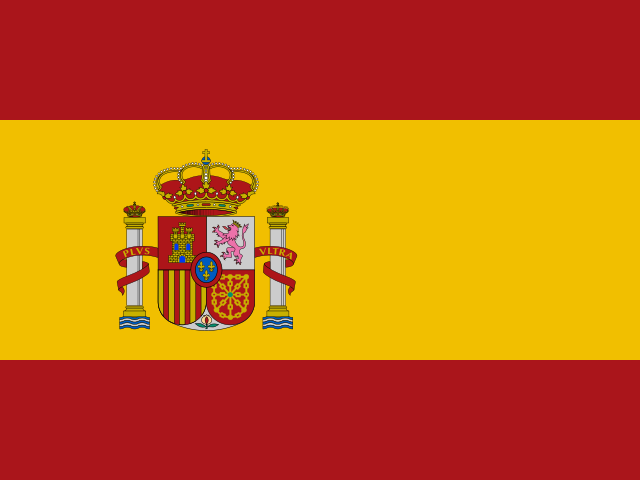 Spaind. Canada, 2-02019
The board lists the finals we could confirm against official or broadcaster results; 2020 was not played. Every final on the board ended 2-0, which says a lot about the three-match tie. The team that wins the No. 2 singles usually takes the trophy without needing its doubles pair. Canada’s 2022 title, with Felix Auger-Aliassime and Denis Shapovalov winning the singles against Australia, was the nation’s first.
FAQ
Davis Cup: questions and answers
In shortShort answers on the format, the qualifying route, the venue and the records, taken from the official Davis Cup site and federation releases cited on this page.
What is the Davis Cup?
The international team competition of men’s tennis, contested by national teams since 1900. It is run by World Tennis, the name the International Tennis Federation trades under since 2026, and 157 nations entered in 2025.
How does the Davis Cup format work?
Teams play two home-or-away qualifying rounds, one in early February after the Australian Open and one in September after the US Open. The seven winners of the second round join the host nation at the Final 8, a knockout week in November with quarterfinals, semifinals and a final.
How many matches are in a Davis Cup tie?
In the qualifying rounds a tie has up to five matches over two days, four singles and one doubles, and the first team to three wins takes it. At the Final 8 a tie has three matches, two singles and one doubles, so two wins are enough.
How do teams qualify for the Davis Cup Finals?
By winning their tie in the September qualifying round. Seven places are filled that way. The eighth goes to the host nation, which receives a wild card; in 2026 that is Italy.
When and where are the 2026 Davis Cup Finals?
The 2026 Final 8 is scheduled for November 24-29, 2026 at the SuperTennis Arena, BolognaFiere in Bologna, Italy. The final is on November 29, 2026.
Who has won the most Davis Cup titles?
The United States, with 32. Australia has 28, France and Great Britain 10 each, Sweden 7, Spain 6 and Italy 4, according to the official Davis Cup history.
Who won the Davis Cup in 2025?
Italy beat Spain 2-0 in the 2025 final in Bologna. It was Italy’s third title in a row.
Who holds the Davis Cup record for most wins?
Nicola Pietrangeli of Italy, who played 164 rubbers and won 120 of them. Australia’s Harry Hopman won 16 titles as captain.
Why is it called the Davis Cup?
After Dwight Davis, one of four Harvard players behind the first match in 1900. He designed the format and paid for the silver trophy himself. The event was first called the International Lawn Tennis Challenge.
Do Davis Cup matches count for ATP ranking points?
No. Davis Cup results do not appear among the events the ATP counts toward the ranking, which is built from Grand Slams, Masters 1000s, the ATP Finals and the other tour, Challenger and ITF events.